Design system consulting · Product teams
Design system consulting that goes beyond the Figma file.
A component library is not solving the problem if designers detach components and engineers rebuild the same states. I help product teams decide what to standardise, connect design decisions to implementation conventions, and document how the system will be maintained.
I'm Mohammed Noushad, from Kerala and based in Dubai for 11 years. I work with UAE teams and collaborate remotely.
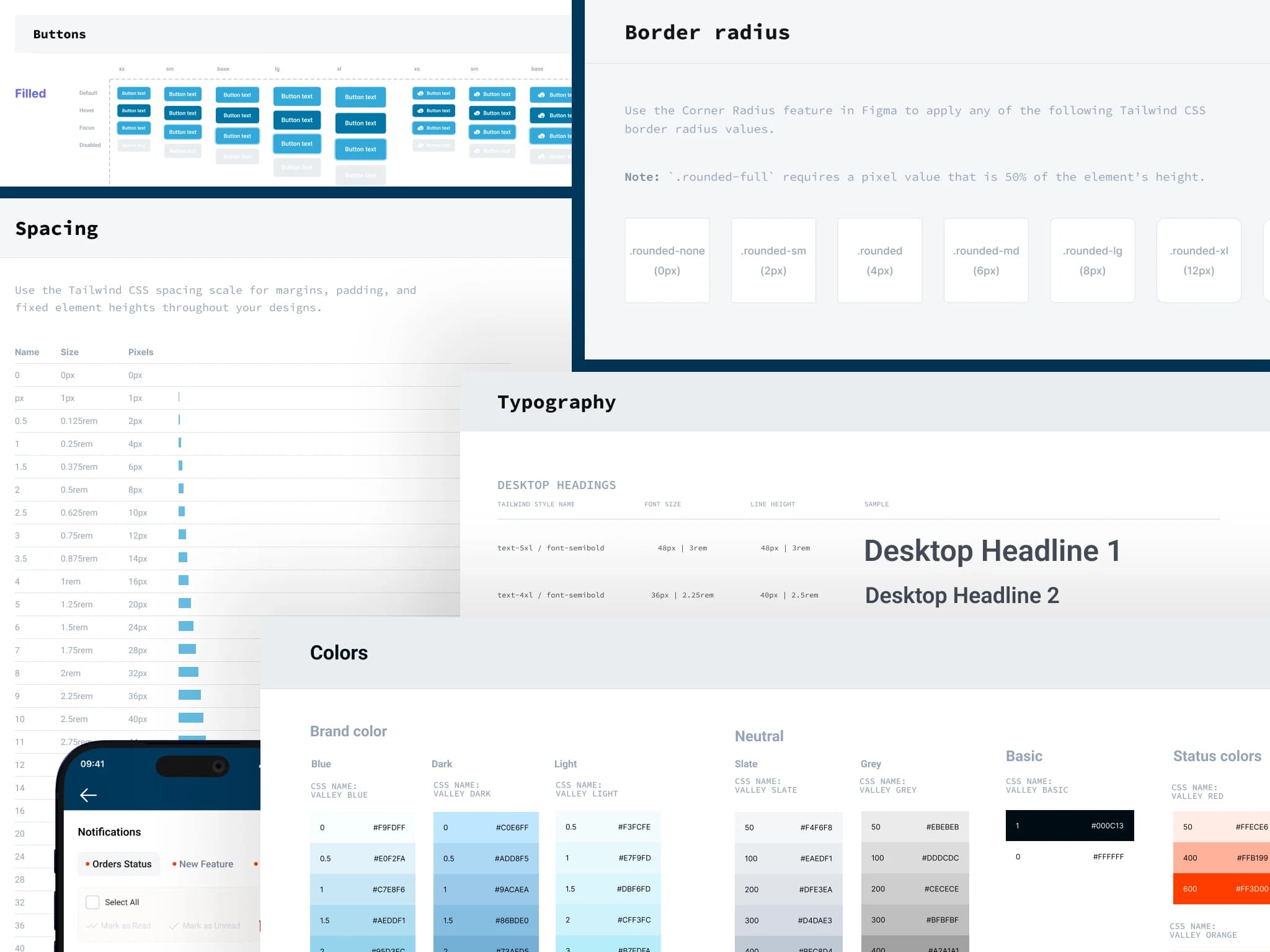
For teams whose interface is growing faster than its rules
- Several products repeat similar forms, tables and dialogs, but their behaviour and styling drift apart.
- Your Figma library and implemented interface use different names, tokens or state definitions.
- A library exists, but nobody is clear about ownership, contribution decisions or migration priorities.
First deliverable: a system inventory and gap map
A review of representative product screens, the current library and available frontend documentation identifies repeated patterns, duplicate components, missing states and naming mismatches. The result is a proposed pilot scope, not an automatic recommendation to rebuild everything.
Foundations, components and the rules for using them
Token structure
Define purposeful colour, typography and spacing roles, naming conventions and a mapping to your engineering stack. Theme or brand variants are included only where the product needs them.
A focused component pilot
Start with agreed high-use components. Document variants, interaction states, responsive behaviour, content guidance and relevant keyboard or focus expectations for engineering review.
Design-to-code alignment
Compare component names and properties with the implemented patterns. Review handoff examples with developers; a Figma library alone is not represented as a shipped frontend package.
Adoption and maintenance
Agree ownership, contribution criteria, change documentation and a migration order. Capture when to reuse a pattern and when a genuinely different task calls for an exception.
Where the scope stops
The scope may cover an existing system review, a pilot library or an expansion. A full coded component library, every legacy screen migration and ongoing governance are not implied. Accessibility requirements belong in component decisions, but documentation alone does not certify the live product.
Prove the system on a real product slice
- 01
Inspect what already works
Review the Figma library, sample screens and frontend conventions with design and engineering. Keep useful existing patterns rather than making a new library for its own sake.
- 02
Build and review a pilot
Apply agreed tokens and components to a representative workflow. Check state coverage, naming and implementation feasibility before expanding the system.
- 03
Plan adoption
Document decisions and handoff expectations. Agree who owns future changes and which product areas should migrate next, within the team's capacity.
A system designed around enterprise implementation
Valley Design System
Tailwind-aligned tokens, component categories, interaction-state documentation and developer-handoff annotations. Explore the component examples and the decisions connecting design with implementation.
Read case study →Valmont: shared patterns across legacy applications
A complementary view of how a shared component library supported enterprise navigation and workflow redesign. The system sits within a product context, not as a disconnected UI kit.
Read case study →Questions about design system consulting
Do we need a new design system?
Not necessarily. If your existing library is useful, the right scope may be an inventory, clearer documentation or a small set of missing patterns. The initial review should establish the need before a rebuild is proposed.
Can you work with our frontend framework?
The starting point is your current stack and conventions. My Valley case study documents Tailwind alignment. We will confirm any framework-specific implementation requirement with your engineers before agreeing scope; I do not assume every engagement includes production code.
How do you avoid another unused library?
Choose a real workflow as the pilot, involve the people who implement it and make maintenance ownership explicit. Adoption and migration decisions are part of the scope discussion, not something left until the file is handed over.
How are the engagement and price scoped?
Scope depends on product surfaces, existing foundations, component complexity and whether you need review, creation or adoption support. Share a sample library and the implementation constraints so I can propose an appropriate phase of work.
Where does your system break down?
Describe the products and frontend stack, what already exists in Figma or code, and who will maintain it. Share non-sensitive examples of drift or missing patterns if available.
Scope, fees, availability and any next steps are agreed before an engagement begins.